TonicNest may earn a commission if you buy through links on this page, at no extra cost to you. That does not change what we report.
Part of our Joint Glide overview. Last checked October 27, 2026.
The Joint Glide supplement is a capsule joint formula that prints every ingredient and dose on its label, so you can check it against published research before you spend money. Two capsules a day supply 10 ingredients, including devil's claw root powder 500 mg, MSM 300 mg and glucosamine hydrochloride 200 mg[1].
That glucosamine amount is about 13% of the 1,500 mg a day used in the large NIH-funded GAIT trial[4].
What is the Joint Glide supplement?
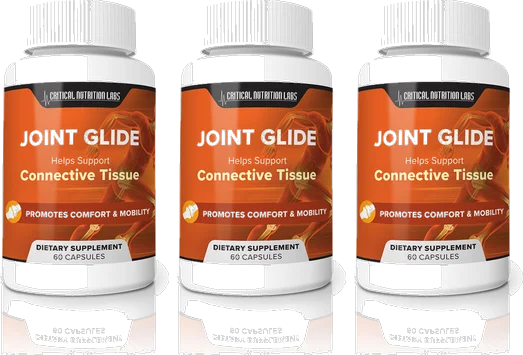
Joint Glide is a dietary supplement for joint comfort sold under the Critical Nutrition Labs brand by Critical Bench, Inc. of Clearwater, Florida, through the ClickBank retail platform[3]. You take 2 capsules each morning with 8 oz of water and a few bites of food, so one 60-capsule bottle lasts 30 days.
The label has no proprietary blend: each of the 10 ingredients has its own milligram amount[1]. That openness is uncommon in this category. It also shows where the formula is thin: most of the joint ingredients sit well under the amounts that clinical trials used.
No study of Joint Glide itself exists. The vendor's sales letter says it can "Rebuild Thick Strong Cartilage In Days" and help people "Avoid Surgery"[2]. Those are the vendor's words, and nothing we found tests them.
What do the Joint Glide supplement facts show?
The facts show a fully disclosed label, a named US seller and one-time pricing, with three gaps: no product trial, small doses of the best-known joint ingredients, and an unnamed manufacturing facility. Here is the product at a glance, checked October 27, 2026.
| Item | What we found |
|---|---|
| Form and serving | Capsules, 2 per day, 60 per bottle (30 days) |
| Ingredients | 10, all with amounts; no proprietary blend[1] |
| Largest doses | Devil's claw root powder 500 mg, MSM 300 mg, glucosamine HCl 200 mg |
| Pine bark | 150 mg, Pinus massoniana, 95% proanthocyanidins |
| Minerals and vitamin | Magnesium 100 mg, zinc 10 mg, copper 2 mg (222% DV), vitamin B6 0.5 mg |
| Seller | Critical Bench, Inc., 15373 Roosevelt Blvd, Suite 203, Clearwater, FL 33760, 1-727-351-3065[3] |
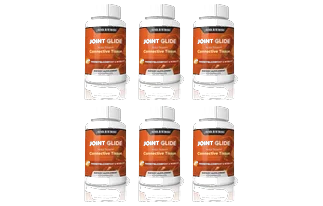
| Price | 1 bottle $69 + $7.99 shipping; 3 for $177; 6 for $294 (checked October 27, 2026) |
| Refund | 60 days; bottles mailed back at your cost with the packing slip[3] |
| Product study | None found |
Three points on that label need a second look.
The pine bark is Pinus massoniana, not Pycnogenol
Some third-party pages call the pine bark "Pycnogenol". The vendor label says Pinus massoniana (Masson pine). Pycnogenol is a different species, Pinus pinaster, and its knee trials do not carry over. The only human studies of Pinus massoniana we found looked at blood pressure and urinary symptoms, not joints[9]. Trust the label on the bottle.
The glucosamine and MSM amounts are small
Glucosamine trials used 1,500 mg a day; Joint Glide has 200 mg[4]. MSM trials used 2 to 6 g a day; Joint Glide has 300 mg[5]. Devil's claw is the strongest dose on the label, yet its main knee and hip trial used 2,610 mg of root powder a day, about five times more[6]. Our Joint Glide ingredients breakdown compares each dose.
White willow bark carries aspirin-like cautions
Willow bark contains salicin, a relative of aspirin. The label does not state how much salicin the 150 mg extract supplies. The USP safety summary says willow bark products are not for children, pregnant or nursing women, or people sensitive to aspirin[7].
Quality and track record claims are partly unverifiable
The vendor says Joint Glide is made in a "GMP certified facility right here in the USA" and is "Lab Tested", but it names neither the facility nor the lab. On our October 27, 2026 checks, openFDA showed no recalls and no adverse event reports naming Joint Glide. The seller, Critical Bench, Inc., showed an A+ on the BBB search page; we did not check its complaint file or FDA warning letters, so those stay open questions.
What should you check before buying?
Check your medicines, your allergies and the refund rules before you order. This short list covers what the label and the seller's pages leave open.
- Blood thinners: willow bark is a salicylate, and NCCIH says glucosamine has been tied to bleeding risk with warfarin[8]. Ask your doctor first.
- Aspirin allergy, ulcers or kidney disease: ask a doctor before taking a willow bark product.
- Under 18, pregnant or nursing: the USP labelling advice for willow bark says not for use[7].
- Shellfish allergy: the label does not say where the glucosamine comes from. Ask the seller before ordering.
- Diabetes: NCCIH says glucosamine may raise blood glucose in some people[8].
- Refund route: returns go to a Tallmadge, Ohio warehouse at your cost, and the policy gives two different 60-day start dates[3].
- Checkout add-on: the order form offers a $15 extra item; untick it unless you want it.
Our Joint Glide side effects page covers the safety points in more detail, and how to take Joint Glide covers timing.
See a doctor right away if a joint is hot, red and swollen, if you have a fever with joint pain, if you cannot bear weight after a fall, or if pain wakes you at night and does not ease. A sudden hot, swollen big toe can be gout, which needs a diagnosis (what gout is).
Our take
The Joint Glide supplement earns credit for a full label and a named US seller. The doses are the weak point: glucosamine and MSM sit far below tested amounts, the pine bark species has no joint research, and no trial has tested the formula. Read the vendor's cartilage and surgery claims as marketing. If you still want to try it, clear the willow bark cautions with your doctor first and keep your packing slip for the 60-day refund. Our does Joint Glide work page weighs the evidence, and how we check products explains our method.
Back to the Joint Glide overview.
Frequently asked questions
What is in the Joint Glide supplement?
Each 2-capsule serving lists devil's claw root powder 500 mg, MSM 300 mg, glucosamine HCl 200 mg, Pinus massoniana pine bark 150 mg, white willow bark 150 mg, magnesium 100 mg, zinc 10 mg, copper 2 mg, vitamin B6 0.5 mg and black pepper extract 10 mg.
Is the pine bark in Joint Glide Pycnogenol?
No. The vendor label says Pinus massoniana, or Masson pine, standardized to 95% proanthocyanidins. Pycnogenol comes from Pinus pinaster, a different species, so its knee studies do not apply. Trust the label on your bottle over third-party descriptions.
Who makes Joint Glide?
Joint Glide is sold under the Critical Nutrition Labs brand by Critical Bench, Inc., 15373 Roosevelt Blvd, Suite 203, Clearwater, FL 33760, phone 1-727-351-3065. It is sold through ClickBank. The vendor says it is made in a GMP certified US facility but does not name it.
Can I take Joint Glide with blood thinners?
Ask your doctor first. White willow bark contains salicylates, relatives of aspirin, and NCCIH says glucosamine has been linked to higher bleeding risk in people taking warfarin. Those two ingredients make a medical check sensible before you start.
Is Joint Glide safe with a shellfish allergy?
The label does not state the glucosamine source, and glucosamine is usually made from shellfish shells. Contact the seller at 1-727-351-3065 and ask before ordering. Without a clear answer, people with a shellfish allergy should skip it.
Sources
- Joint Glide Supplement Facts label image. Critical Nutrition Labs, read October 27, 2026.
- Joint Glide sales letter. Critical Nutrition Labs, read October 27, 2026.
- Contact, shipping and returns. Critical Bench, Inc., read October 27, 2026.
- Glucosamine, chondroitin sulfate, and the two in combination for painful knee osteoarthritis (GAIT). New England Journal of Medicine, 2006, read October 27, 2026.
- Efficacy of methylsulfonylmethane (MSM) in osteoarthritis pain of the knee: a pilot clinical trial. Osteoarthritis and Cartilage, 2006, read October 27, 2026.
- Harpagophytum procumbens for knee and hip osteoarthritis: four-month results of a double-blind trial versus diacerhein. Joint Bone Spine, 2000, read October 27, 2026.
- USP safety review of willow bark. Planta Medica, 2019, read October 27, 2026.
- Glucosamine and Chondroitin for Osteoarthritis: What You Need To Know (archived copy). NCCIH, read October 27, 2026.
- Pinus massoniana bark extract and blood pressure in older adults, secondary analysis of a randomized trial. PubMed, 2022, read October 27, 2026.
This page is general information, not medical advice. Dietary supplements are not reviewed by the FDA for safety or effectiveness before they are sold and are not intended to diagnose, treat, cure or prevent any disease. Talk to your doctor before taking any supplement, especially if you are pregnant, nursing, take medication or have a health condition.